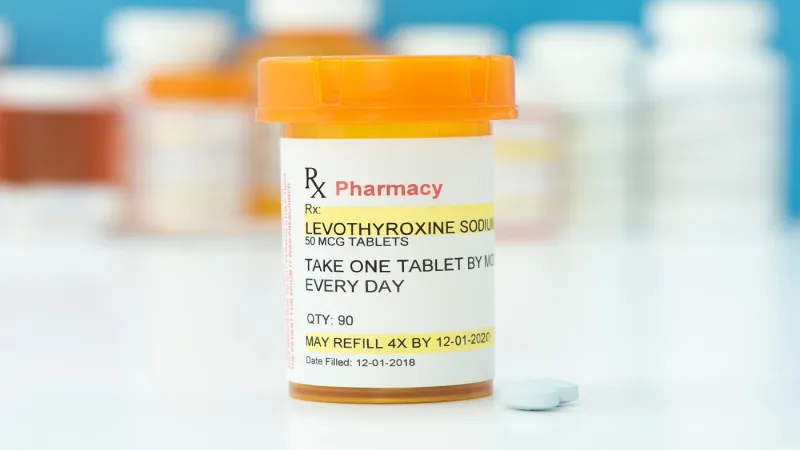
When the Chatbot Sounds Certain: Stress-Testing AI Thyroid Advice in 2026

Photo: Prototyperspective, CC0, via Wikimedia Commons
The new first stop for thyroid questions
A patient misses a levothyroxine dose at 7 a.m. and asks an AI assistant what to do before breakfast. Another patient pastes a TSH result into a chat window and asks whether the dose should change. These are ordinary, human moments, and the convenience is obvious. The risk is equally ordinary: a chatbot can produce a fluent answer that sounds like clinical advice without knowing the patient's age, pregnancy status, heart history, other medicines, or lab trend. In 2026, AI assistants are part of the health-information landscape. They are not a substitute for a prescriber or pharmacist.
What stress-testing means here
This is not a clinical trial or a product ranking. It is a consumer-focused review of common response patterns that patients are likely to encounter when asking popular assistants about levothyroxine. The useful question is not whether an answer sounds confident. It is whether the answer is cautious, current, and honest about what it does not know. A good response should encourage verification, ask for context, and avoid telling a patient to change a prescription dose on the basis of a single chat.
Where the advice tends to wobble
Timing is a frequent trouble spot. Levothyroxine labels and prescriber instructions generally emphasize consistent administration on an empty stomach, with separation from food and certain supplements, but chatbots sometimes flatten that into a casual take it with breakfast or take it whenever you remember. Missed doses are another risk. A common dangerous pattern is telling a patient to double the next dose, which is not a safe default for levothyroxine. Dose changes are perhaps the most serious issue: an assistant may suggest a specific increase or decrease in micrograms without labs, symptoms, or a prescriber's review. TSH interpretation is also prone to overconfidence. One number does not capture free T4, symptoms, age, pregnancy, or the reason for testing. Interaction questions about calcium, iron, coffee, biotin, and acid-reducing medicines can produce oversimplified answers that ignore timing and product differences.
The red-flag checklist
- The assistant recommends a specific dose change without telling the patient to contact a prescriber.
- It advises doubling a missed levothyroxine dose as a general rule.
- It says to stop or start levothyroxine based on a single lab value.
- It ignores pregnancy, heart disease, age, or other medicines.
- It cites a study or guideline that cannot be verified.
- It presents one product or formulation as universally superior.
- It gives no uncertainty, no caveats, and no follow-up questions.
- It tells the patient that a chatbot is enough and a clinician is unnecessary.
Why overconfidence happens
Large language models are designed to produce plausible text, not to practice medicine. They may be trained on outdated labels, mixed-quality web content, or patient anecdotes. They do not have the patient's chart, pharmacy record, or physical exam. They can also be polite to a fault, which sometimes means agreeing with a patient's preferred answer. A fluent paragraph can feel more authoritative than a cautious one, even when the cautious answer is more appropriate. Patients should judge the answer by its safety behavior, not by its tone.
How to use chatbots as prep tools
A chatbot can be useful before an appointment. It can help a patient draft questions, organize a symptom log, define terms such as TSH and free T4, or prepare a medication list that includes supplements and over-the-counter products. It can suggest what to ask about timing, storage, and interactions. It should not be used to decide a dose, interpret a lab in isolation, or replace a pharmacist's review of a specific product. Patients should also avoid entering identifiable information into a chat window and should verify any recommendation with a licensed professional.
A better script for the next appointment
Instead of asking an assistant whether a dose should change, a patient might ask it to help formulate a question: My TSH was 4.8 on my current dose, and I have been more tired lately. What should I ask my prescriber about timing, product changes, and follow-up testing? That reframes the tool as a preparation aid. At the appointment, the patient can ask whether the lab was drawn at the right time, whether a formulation switch occurred, whether any new supplement could interfere, and when the next check should be scheduled.
Bottom line
AI assistants can make thyroid information easier to explore, but they can also make bad advice sound smooth. For levothyroxine, the stakes are dose precision, timing, and monitoring. SynthroidB Online treats chatbots as question-prep tools, not as endocrinologists. The safe pattern is simple: use AI to organize questions, then bring those questions to a prescriber or pharmacist who can see the whole patient.