Tablet, Softgel, or Liquid: A 2026 Map of Levothyroxine Dosage Forms
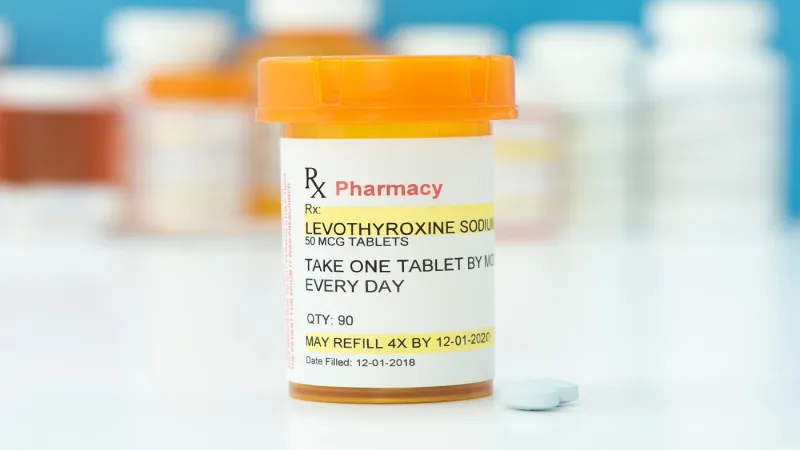
Photo: levothyroxine tablets softgel capsules and liquid medicine bottles on pharmacy shelf, via cdn.consumerlab.com
Same hormone, different delivery
Levothyroxine is the synthetic form of thyroxine, and the active ingredient is the same across dosage forms. The delivery system is not. Tablets, softgel capsules, and oral liquids may use different fillers, coatings, solvents, and manufacturing processes. Those differences can influence how a patient absorbs the medicine, how it must be stored, and whether insurance will cover it. Two products that both say levothyroxine 50 mcg are not automatically interchangeable in everyday practice. A switch should be a care-team decision followed by appropriate monitoring.
Tablets: the default and its variables
Tablets are the most familiar form for U.S. patients. They are available in multiple strengths, including increments that allow fine adjustment. Tablets are portable, easy to store, and widely stocked. They also vary by manufacturer in inactive ingredients, scoring, and shape. Some patients notice differences after a brand-to-generic or generic-to-generic switch, and thyroid function tests may need to be checked after a product change. Tablets should be taken as directed, usually with water on an empty stomach, and separated from certain foods, supplements, and medicines according to the prescriber's instructions.
Softgel capsules: a different package
Softgel capsules are another option. They may be marketed as liquid-filled or gel capsules, and they are not designed to be split or crushed. Their inactive ingredients can differ from tablets, and some patients ask whether they absorb more consistently. The evidence and clinical experience vary by product, and the answer is not universal. Cost and coverage are practical considerations: softgels may be branded, may sit on a different insurance tier, or may require a prior authorization. A patient who switches to a softgel should confirm the dose, storage instructions, and monitoring plan with the prescriber.
Oral liquids: precision and practical trade-offs
Oral liquid levothyroxine products can be useful for patients who have difficulty swallowing tablets or who need very small dose adjustments. Liquids require careful measurement, often with an oral syringe, and they may need specific storage conditions. They can be more expensive and less consistently stocked than tablets. Insurance coverage may be limited. A liquid is not simply a tablet dissolved in water; it is a formulated product with its own absorption profile and instructions. Patients should not substitute a homemade mixture or split a liquid dose without explicit guidance.
The absorption conversation
Regardless of form, levothyroxine absorption is sensitive to timing and to other substances. Coffee, high-fiber meals, calcium, iron, and some medications can interfere. The dosage form may change the practical instructions, but it does not erase the need for consistent administration. Patients should tell the prescriber about all supplements and prescription medicines, including antacids and proton pump inhibitors. After any formulation switch, a TSH check is typically part of the plan, because the same strength in a different product may not produce the same blood levels for every patient.
Cost, coverage, and access in 2026
U.S. patients face a patchwork of formularies, copays, and pharmacy stock. A tablet that is inexpensive as a generic may be preferred by insurance, while a softgel or liquid may require a prior authorization or a higher tier. Manufacturer coupons may help some commercially insured patients but not those on Medicare or Medicaid. Patients should ask the pharmacist for a cash-price comparison and a coverage check before assuming that one form is cheaper. The lowest sticker price is not always the lowest total cost if it leads to inconsistent use or unmonitored switching.
Switching logistics
A switch should start with a conversation, not a pharmacy swap. The prescriber should know which product is being changed and why. The pharmacist should confirm that the new product is the same strength and is being taken on the same schedule. The patient should keep a note of the manufacturer and formulation, especially if symptoms or test results change. It is reasonable to ask whether a recheck is needed and when. Patients should not change forms simply because a friend prefers one, or because an online seller describes a product as more natural or better absorbed.
Questions for the care team
- Is this dosage form appropriate for my swallowing, lifestyle, and monitoring needs?
- Does the new product contain fillers or dyes I should know about?
- Will my insurance cover it, and is a prior authorization required?
- How should I store it, and can it be split or crushed?
- When should my TSH be rechecked after the switch?
- What symptoms should prompt a call before the next scheduled lab?
Bottom line
Levothyroxine dosage forms are not fashion choices. They are clinical and practical decisions with consequences for absorption, cost, and follow-up. SynthroidB Online presents this comparison for general education. Patients should treat any formulation change as a shared decision with a prescriber and pharmacist, supported by appropriate testing rather than assumption.