Counting Pennies for Levothyroxine: How to Shrink Your Thyroid Medication Bill in 2025
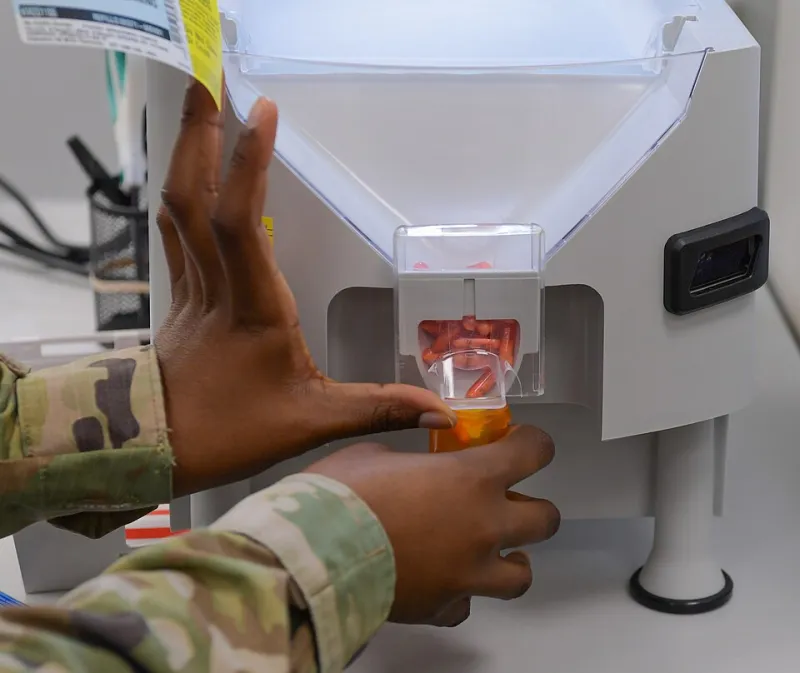
Photo: U.S. Air Force photo by Airman Trevor Calvert, Public domain, via Wikimedia Commons
For a medication that millions of Americans take every single morning, levothyroxine carries a remarkably wide range of price tags. The same 90-tablet supply of generic levothyroxine might cost a few dollars at one pharmacy and forty times that amount at another across town. For patients managing hypothyroidism over a lifetime, those differences add up. Understanding the savings landscape in 2025 — from manufacturer copay cards to discount apps to bare-bones generic lists — can keep more money in your pocket without interrupting a treatment routine you depend on daily.
Why the Same Pill Costs So Many Different Prices
Levothyroxine occupies an unusual position in the pharmaceutical marketplace. It has been generic for decades, which should push prices toward the floor, yet branded Synthroid remains heavily marketed and often priced well above its generic equivalents. Pharmacy reimbursement contracts, cash pricing structures, and chain-specific discount programs all layer on top of that, producing the patchwork of costs patients encounter.
Add insurance to the mix and the picture grows more complicated. A copay that seems reasonable in January can shift mid-year if your plan moves the drug to a different tier or changes its preferred pharmacy network. Patients paying entirely out of pocket — the uninsured, those with high-deductible plans — face the steepest and most confusing version of this landscape.
Manufacturer Savings: What Synthroid Offers
AbbVie, the maker of Synthroid, has historically provided a copay savings card for commercially insured patients, which can reduce the branded product's cost significantly at participating pharmacies. These cards typically come with restrictions: they generally exclude patients enrolled in government insurance programs such as Medicare Part D or Medicaid, and they usually require commercial drug coverage to activate.
For eligible patients who prefer the brand — perhaps because of a consistent response to Synthroid or a physician's specific recommendation — the card can bring the out-of-pocket cost down to a manageable monthly figure. Eligibility terms and program availability change, so verify current details directly through the manufacturer's patient resources or your pharmacist before counting on a particular price.
Discount Cards and Apps: The Middle Path
Pharmacy discount programs such as GoodRx, SingleCare, and similar services negotiate reduced cash prices with pharmacies and pass some of that savings to consumers. For generic levothyroxine, these discounts can be dramatic. A month's supply that might ring up at $25–$50 on plain cash pricing at some pharmacies can drop to under $10 — sometimes under $5 — with a discount card.
A few practical notes for using these tools well:
- Compare before you commit. Prices differ not only between chains but between locations of the same chain. Check multiple options in your ZIP code.
- Discount card prices are not insurance. They cannot be combined with your insurance copay, so run the numbers both ways. Sometimes the discount card beats your copay.
- Ask the pharmacist to apply the lowest available price. Many will do this automatically; some will not unless asked.
The $4 Lists: Old-Fashioned, and Often Unbeatable
Several major chains — Walmart is the best-known example, with Kroger and others offering comparable programs — maintain lists of generic medications available at flat, low cash prices, frequently $4 for a 30-day supply or $10 for 90 days. Levothyroxine in common strengths has long appeared on many of these lists.
For uninsured patients, these programs remain among the simplest and cheapest routes to a steady supply. The trade-offs are modest: you typically pay cash, the program may not apply to every strength or quantity, and availability varies by store. Still, for a maintenance medication taken indefinitely, locking in a predictable $10 for three months of therapy is difficult to beat.
Insured vs. Uninsured: A Realistic Price Snapshot
Exact figures fluctuate, but the general pattern in 2025 looks like this:
- Insured patients with commercial coverage often pay a $0–$15 copay for generic levothyroxine, or use a manufacturer card to reduce branded Synthroid to a comparable monthly cost.
- Uninsured patients using a discount card or a $4 generic list frequently pay between $4 and $15 per month for generic levothyroxine.
- Uninsured patients paying plain cash prices without any discount mechanism can encounter charges of $20–$60 or more per month at some pharmacies — a premium paid purely for not asking about alternatives.
The lesson is straightforward: the single most expensive way to buy levothyroxine is to pay cash without checking for discounts first.
Talking to Your Doctor About Affordability
Cost conversations with clinicians can feel awkward, but prescribers would almost always rather adjust a prescription than have a patient stretch or skip doses. A few approaches work well:
- Ask directly whether generic levothyroxine is appropriate for you. For most patients, it is, and the savings are substantial.
- Mention the pharmacy you actually use. Prescribers can often steer prescriptions toward strengths or quantities that qualify for discount programs.
- Ask about 90-day supplies. Extended-day fills frequently carry lower per-tablet costs and reduce pharmacy trips.
- Flag any coverage changes early. If you lose insurance or enter a coverage gap, your provider can help you pivot to the most affordable legitimate option before your supply runs out.
One caution: affordability should never push you toward gray-market or overseas sources. Levothyroxine is a narrow-therapeutic-index medication, meaning small variations in dose can affect thyroid hormone levels. Stick to licensed US pharmacies and verified discount programs.
The Bottom Line
Hypothyroidism is a lifelong condition, and levothyroxine is a lifelong expense — but it does not need to be a large one. Between manufacturer savings cards for brand-loyal patients, discount apps that slash cash prices, and $4 generic lists at national chains, nearly every patient in the United States has access to legitimate levothyroxine at a modest monthly cost. The key is treating your pharmacy choice as actively as you treat your dosage: check prices, ask questions, and never assume the first number quoted is the only one available.